
| Product Documentation
AD Self Service Portal
Notifications
To configure the notification settings of the AD Self-Service Portal, navigate to Notifications
Event Templates
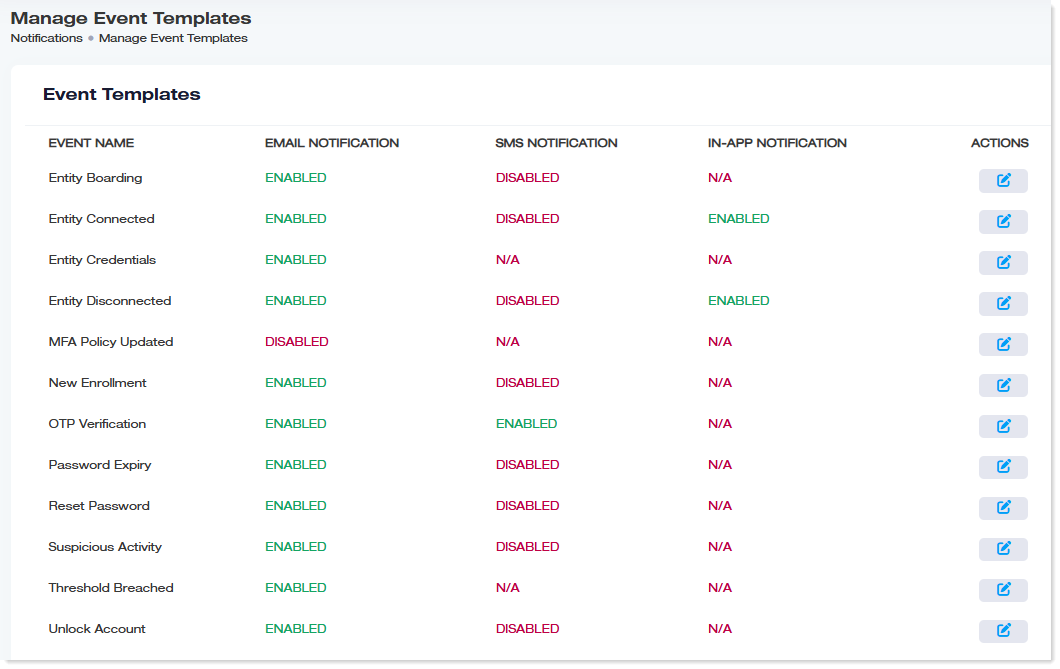
Actions that require notifications or alerts to be sent out to users (admins) through emails, SMS, or in-app notifications have predesigned and ready-to-use email templates in AD Self-Service Portal. However, these templates may be customized by the admin (Portal Admin) according to its requirements.
To modify information regarding event templates, click Notifications >> Event Templates.
|
Manage Event Templates page shows following information:
|
Edit Event Template
To modify event templates, click  under Actions column and modify the information as required.
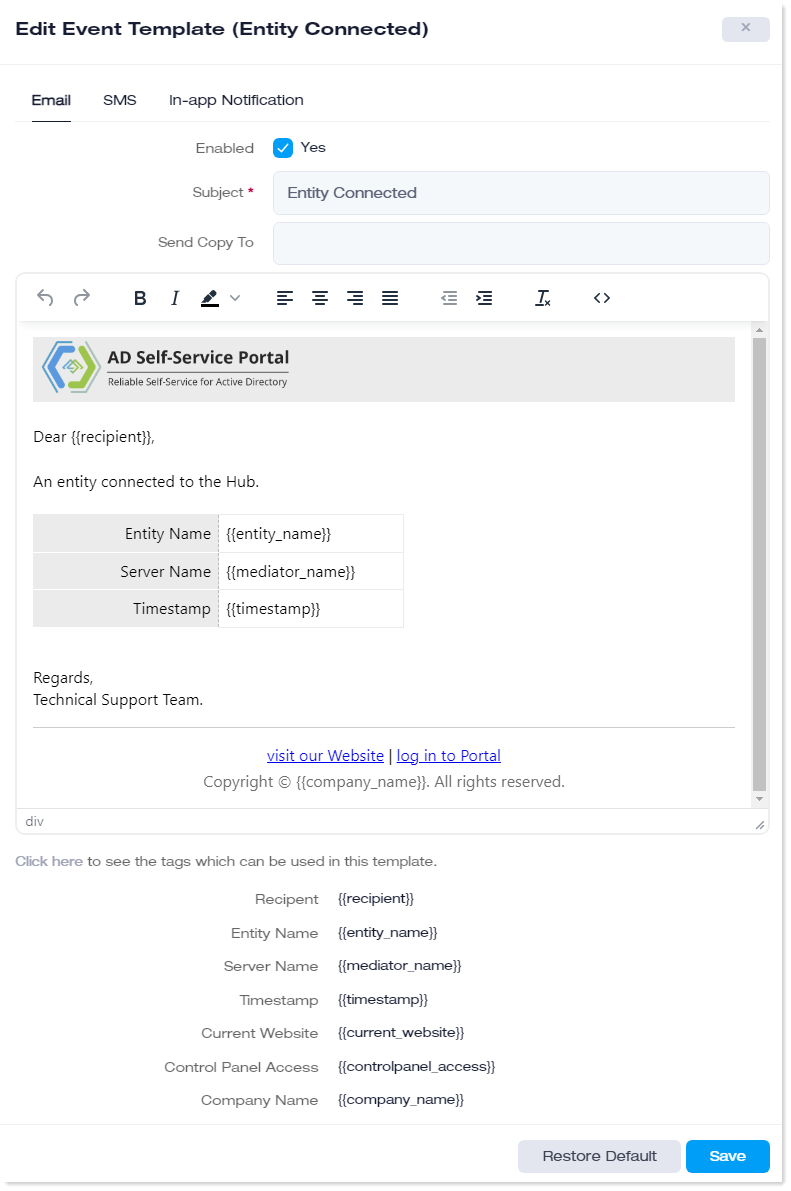
Event notifications can be sent out to users through email. To send them through email, notifications through email need to be enabled.
- Enabled: Enable the ‘Yes’ check box if you want to send notifications through email.
- Subject: Define the subject for the emails. Mails will be sent with this phrase in the subject.
- Send Copy To: If a copy needs to be sent to another email address, define it here.
SMS
Notifications can also be sent out through SMS. To send them through SMS, notifications through SMS need to be enabled.
- Enabled: Enable the ‘Yes’ check box if you want to send notifications through SMS.
- Send Copy To: If a copy needs to be sent to another phone number, define it here.
- SMS Body: Give the notification text in the body textbox.
In-app Notification
Notifications can be displayed in the notifications section (top right corner) in the application interface. To display them in the top right corner, In-app notifications need to be enabled.
Tags
Each template uses some HTML tags. Some tags are available by default however others can be included in the templates later by the Portal Admins. The templates include the following tags:
- Recipent: {{recipient}}
- Entity Name: {{entity_name}}
- Server Name: {{mediator_name}}
- Timestamp: {{timestamp}}
- Current Website: {{current_website}}
- Control Panel Access: {{controlpanel_access}}
- Company Name: {{company_name}}
Notification Delivery Settings
Event notifications can be sent out to users through email and SMS. To modify settings related to delivery notifications, click Notifications >> Notification Delivery Settings.
Email Delivery Settings
AD Self-Service Portal employs SMTP settings of a mail server to send event notifications through email.
To configure email delivery settings, click Email Delivery Settings.
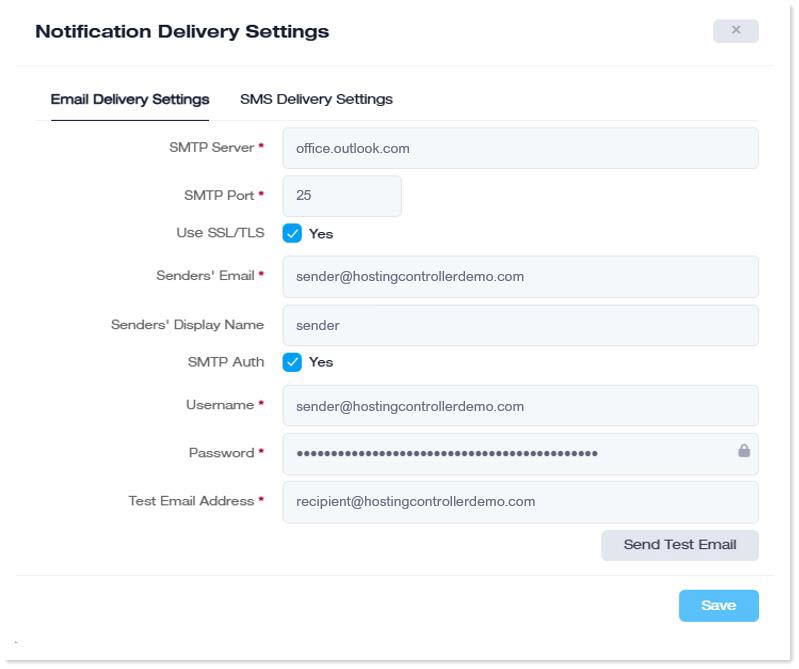
- SMTP Server: It is the SMTP address of the mail server.
- SMTP Port: Provide the port of the SMTP server. This usually is 25.
- Use SSL/TLS: Select this check box if you want to send emails securely. Mails sent over an SSL connection are encrypted and impossible to read in transit. ADSS Portal also supports TLS, which is simply an updated, more secure, version of SSL.
- Sender’s Email: This is the address from which the recipients will receive emails.
- Sender’s Display Name: This is the name of the sender.
- SMTP Auth: This option, if selected, requires the mail server to authenticate emails. The user specified for sending emails has to identify himself and after successful authentication emails are transmitted.
- Username: The Username of the specified user must identify itself.
- Password: Password of the specified user that must identify itself.
- Test Email Address: You can also test your email delivery settings. Test mail can be sent to make sure that the emails are being delivered. Specify the recipient for the test email.
- Send Test Email: This sends test mail to make sure that the emails are being delivered.
SMS Delivery Settings
Event notifications can also be sent to users through SMS (Short Message Service). To send notifications via SMS, an SMS gateway must be configured in the AD Self-Service Portal. By default, the AD Self-Service Portal supports the Twilio SMS Gateway, but you can integrate your own if you prefer not to use Twilio. To learn how to integrate an SMS gateway of your choice, see How to Integrate a New SMS Gateway.
To configure SMS delivery settings, click SMS Delivery Settings.
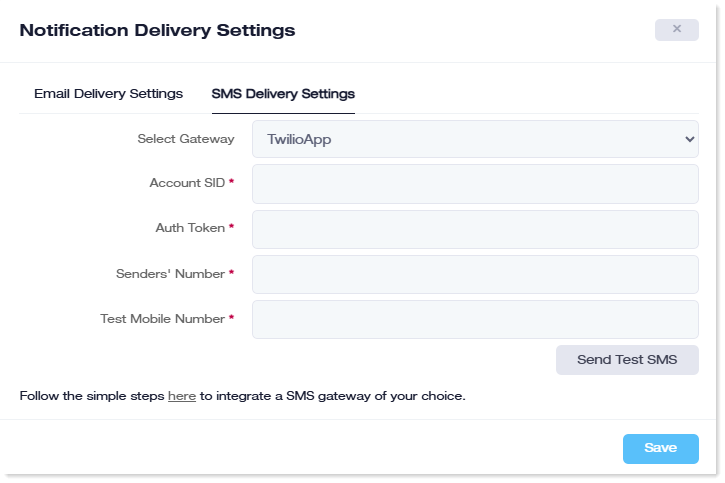
For Twilio SMS Gateway
- Select Gateway: Select the Twilio SMS Gateway from the dropdown menu.
- Account SID: Provide the Twilio Account SID here. A Twilio Account SID is a 34-character alphanumeric identifier that begins with the letters 'AC' and can be found on the Twilio dashboard. It is a unique identifier that acts as the primary key for identifying a specific Twilio account. It is also a credential that acts as a username for logging into a Twilio account.
- Auth Token: Provide the Twilio Auth Token here. A Twilio Auth Token is a password that authenticates API requests to Twilio's services, such as sending SMS messages.
- Senders' Number: A "Sender's Number" refers to the phone number or alphanumeric sender ID that is displayed on the recipient's phone as the source of an SMS message, essentially identifying who sent the message; it can be a standard Twilio phone number, a short code, or an alphanumeric string representing a company name or brand depending on the country and configuration used.
- Test Mobile Number: A “Test Mobile Number” refers to the mobile number to which test messages are sent to ensure the gateway is delivering SMS correctly. Specify the recipient’s mobile number for the test SMS.
- Send Test SMS: This sends SMS to the mobile number provided for test. To send test SMS click Send Test SMS.
Sent/Unsent Emails
While sent emails are emails that have been delivered to the recipients, unsent emails are a list of all those emails which are sent but not delivered to the recipients yet. To modify settings related to sent and unsent email, click Notifications >> Sent/Unsent Emails.
 to refresh/update the emails.
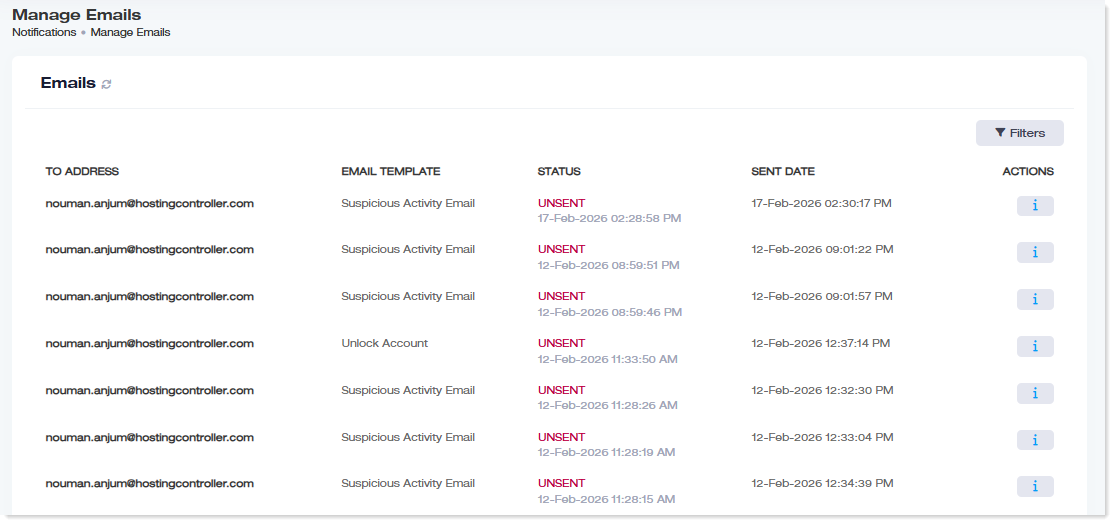
- To Address: Displays the recipient email address to which the email notification is sent.
- Email Template: Indicates the type of email notification triggered.
- Status: This indicates whether the email was sent or unsent.
- Sent Date: This indicates the date and time when the email was sent or attempted.
- Actions: It allows viewing detailed information about the email notification.